Temperature + Humidity + Vibration: Lab Companion Triple Comprehensive Test Chamber, One-Step Solution for Multi-Stress Comprehensive Testing
May 19, 2026
An electric vehicle galloping on the highway has its Electronic Control Unit (ECU) simultaneously subjected to high temperatures in the engine compartment, vibrations from road bumps, and moisture intrusion during rainy days; a drone flying at high altitude has its navigation module experiencing -40℃ low temperatures, continuous vibrations transmitted from the wings, and sudden humidity changes when quickly passing through clouds. In real-world scenarios, products are never exposed to a single environmental stress, but rather the synergistic superposition of three stresses: temperature, humidity, and vibration.
For a long time, traditional environmental testing has mostly adopted a sequential testing mode of "first temperature and humidity, then vibration". This method separates stresses that should act simultaneously, which not only deviates from the actual service environment of products but also may miss core defects that only appear under the combined action of multiple stresses—such as cracking of materials caused by vibration after low-temperature embrittlement, and accelerated fatigue failure of solder joints due to vibration under high-temperature creep conditions.
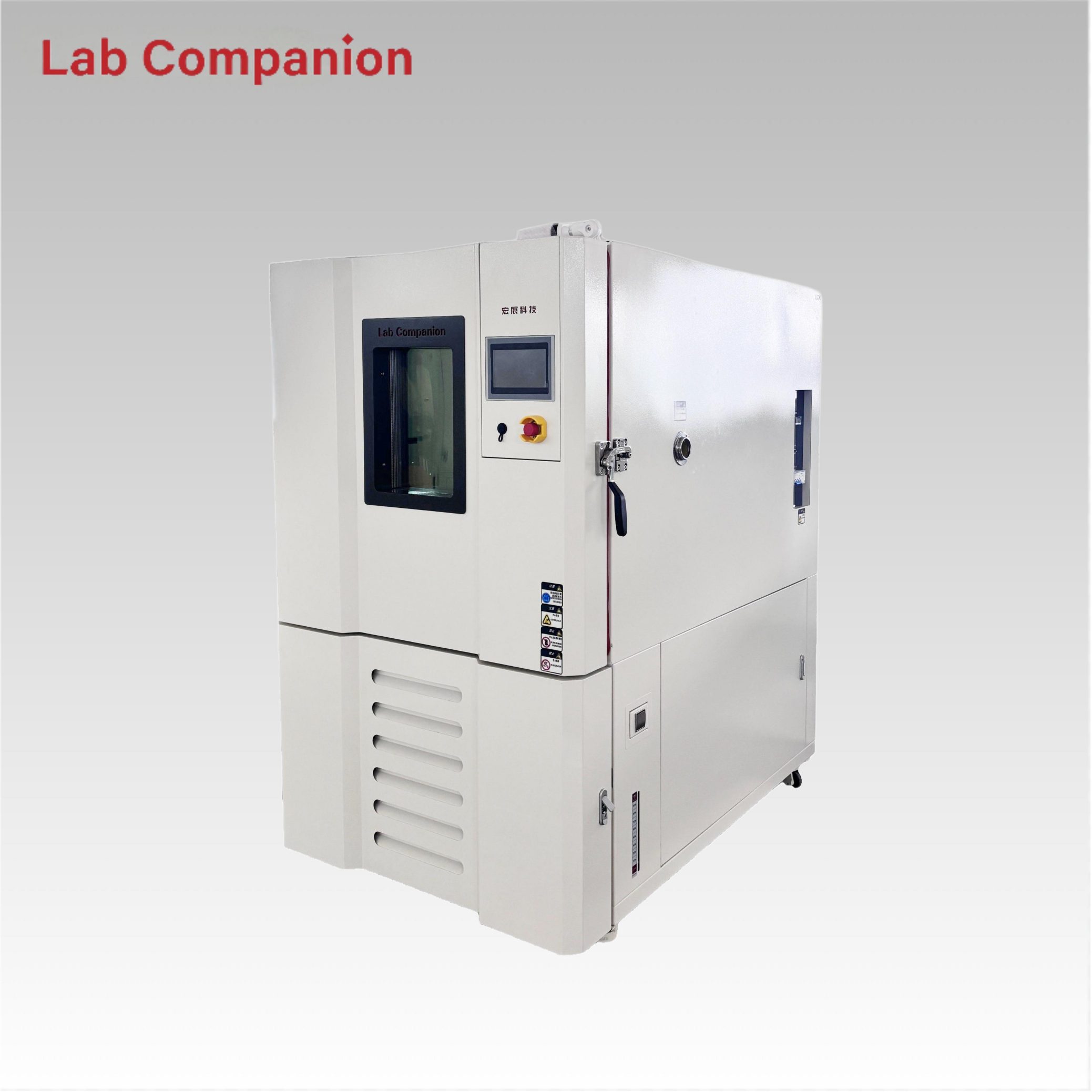
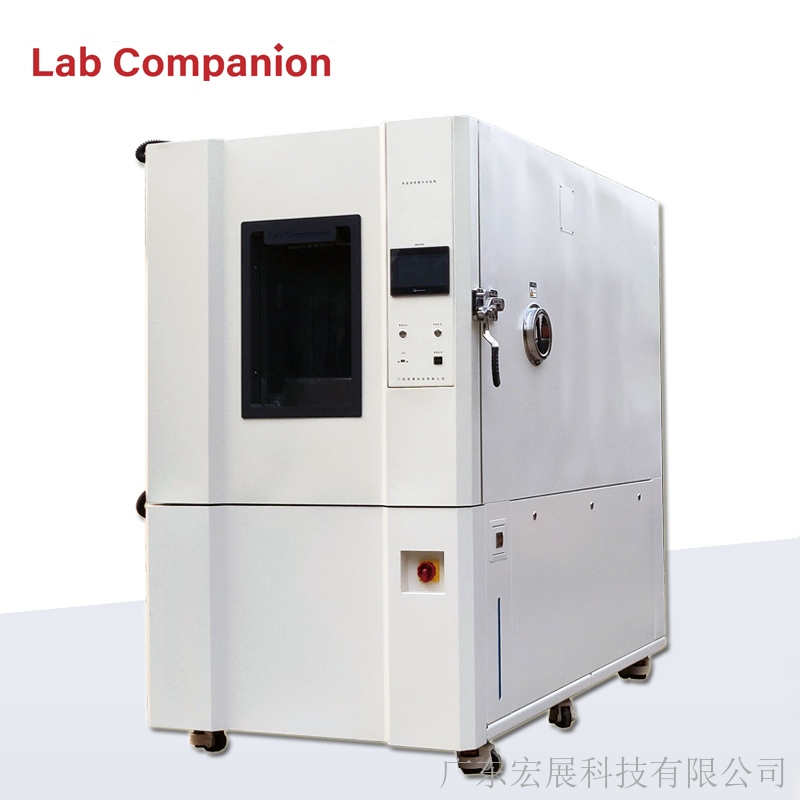
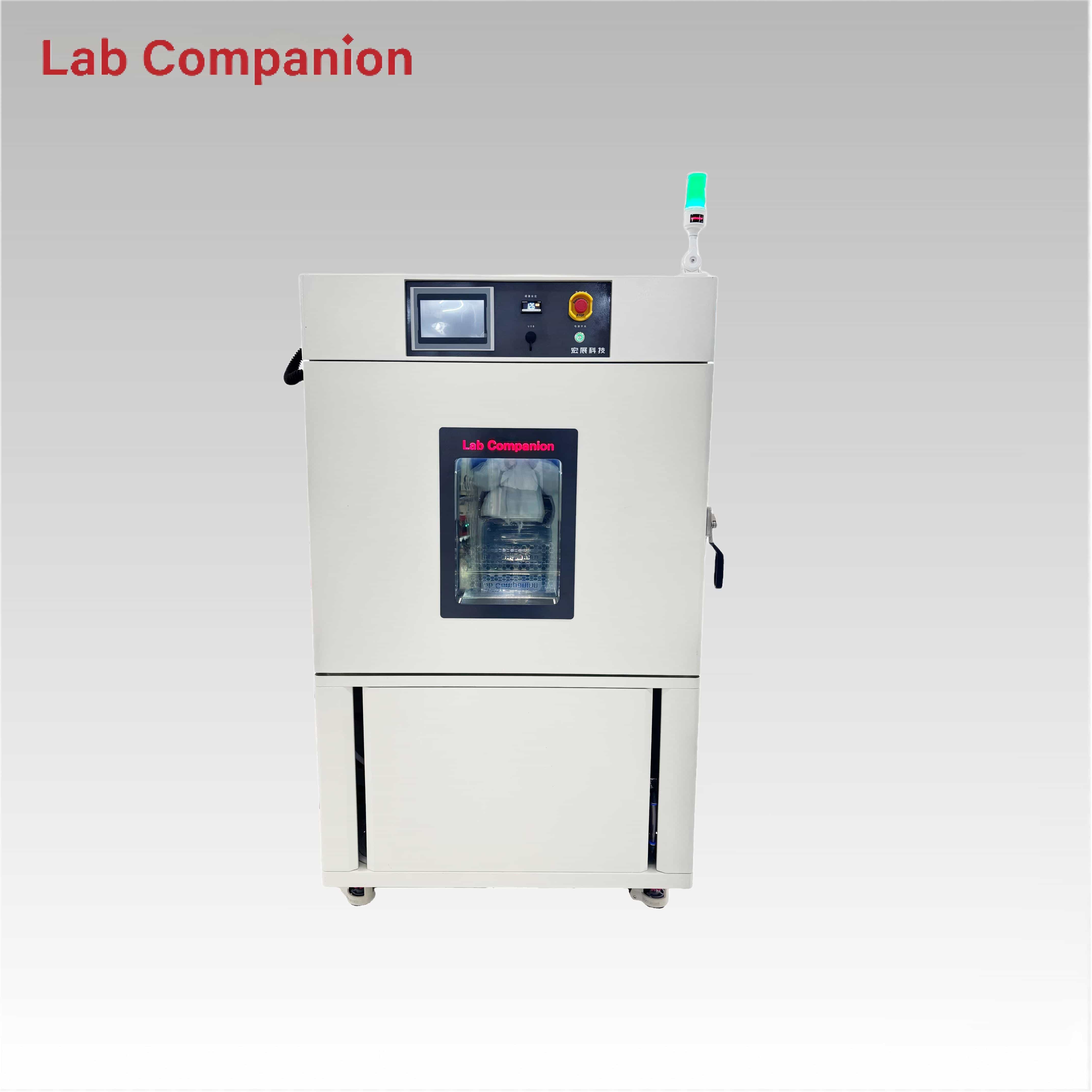
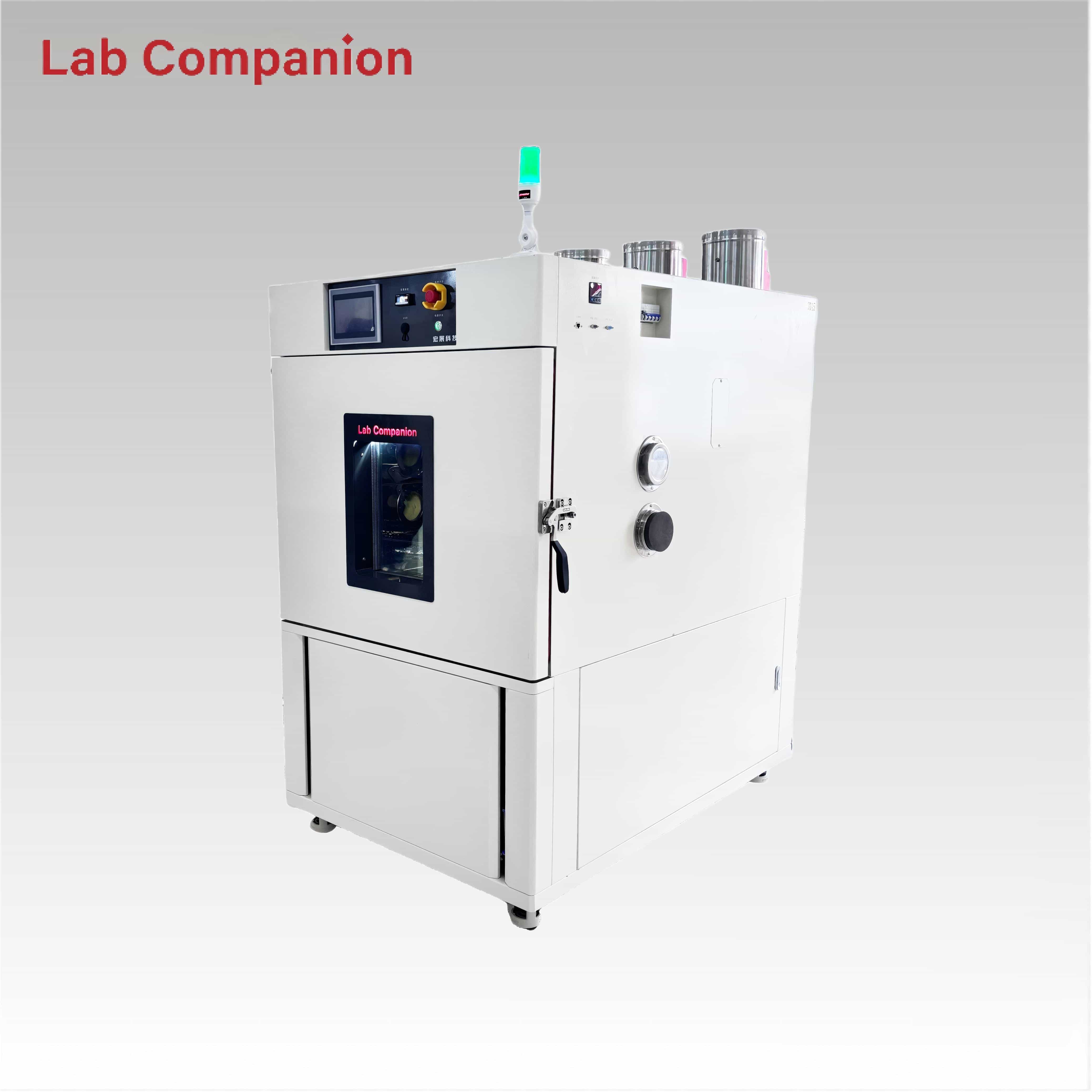
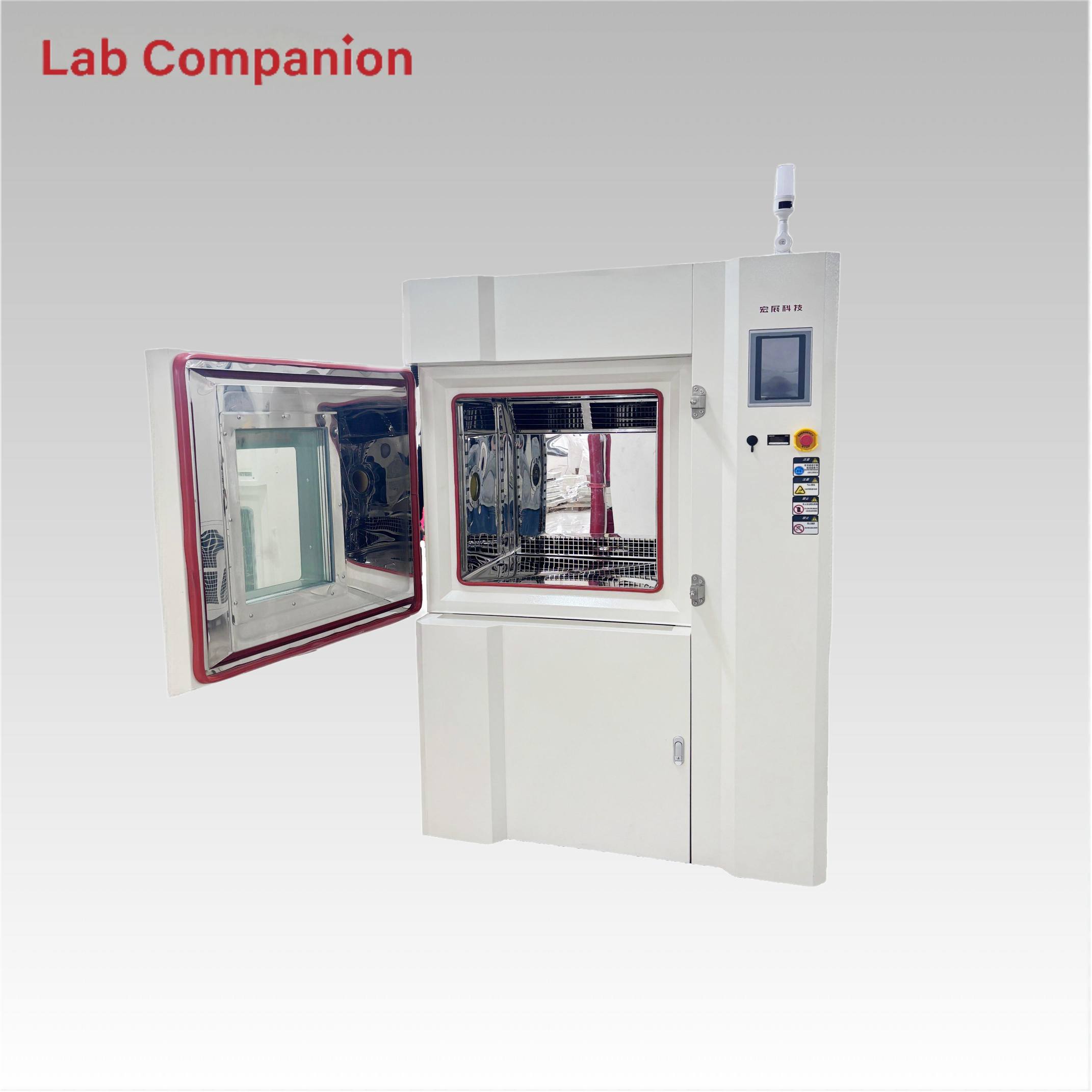
The emergence of the triple comprehensive test chamber is precisely to fill this industry gap. It integrates temperature, humidity, and vibration into one, enabling synchronous, continuous, and programmable application of multi-stress environments to accurately reproduce the composite working conditions of products and efficiently capture potential defects. The triple comprehensive test chamber (THV Series) from Lab Companion is a benchmark product that has been deeply engaged in this technical field for many years.
I. Why "Triple Comprehensive"? — The Underlying Logic of Multi-Stress Synchronous Testing
1.1 Stress Synergistic Effect: 1+1+1 > 3
The core value of triple comprehensive testing stems from the synergistic coupling effect between stresses—when the three stresses act simultaneously, their combined impact is far greater than the simple superposition of their individual effects:
• Temperature + Vibration: The superposition of material thermal expansion coefficient and vibration stress accelerates solder joint fatigue and connector loosening, shortening product service life;
• Humidity + Vibration: After moisture penetrates the material, vibration accelerates the expansion of internal cracks, which is likely to cause vibration-induced cracking of PCB boards after moisture absorption;
• Temperature + Humidity + Vibration: The synergistic effect of the three can accurately trigger intermittent faults and early failures of products, restoring fault scenarios in real use.
In short, many failures of products in actual use are not caused by a single environmental factor, but by the composite result of multi-stress coupling. Only triple comprehensive testing can effectively capture such coupling failure modes.
1.2 Core Application Scenarios of Triple Comprehensive Testing
Triple comprehensive testing is widely used in various industries with strict requirements on product reliability, accurately matching the testing needs of different fields:
• Automotive Electronics: ECU, sensors, in-vehicle entertainment systems, etc., simulating the composite environment of engine vibration + temperature cycling + humidity, which is consistent with the service conditions of in-vehicle components;
• Aerospace: Airborne electronic equipment and navigation systems, reproducing the comprehensive working conditions of flight vibration + high-altitude low temperature + damp heat, ensuring the reliability of high-altitude equipment;
• Military Equipment: Communication equipment, radar, missile components, meeting the requirements of military standards such as GJB 150.24A and adapting to extremely complex environments;
• New Energy: Battery packs and electronic control systems, verifying safety under extreme temperature, humidity, and vibration conditions, building a solid line of defense for new energy products.
1.3 Relevant Standard System
Triple comprehensive testing is supported by a complete domestic and international standard system, providing authoritative basis for equipment performance and test results:
• International Standard: IEC 60068-2-53, specifying the method specifications for combined temperature-humidity and vibration tests;
• Domestic Standards: GB/T 2423.35 (Low Temperature/Vibration Combination), GB/T 2423.36 (High Temperature/Vibration Combination), GB/T 2423.63 (Temperature-Humidity/Vibration Combination), forming a complete civil standard system;
• Military Standard: GJB 150.24A, regulating the requirements for temperature-humidity-vibration-altitude four-comprehensive tests of military equipment.
These standards put forward clear requirements for equipment performance: the temperature range should cover -70℃ to +150℃, the humidity range 20%RH to 98%RH, and the vibration table should support sine/random vibration, shock and other modes.
II. Technical Challenges: Core Difficulties of Triple Comprehensive Test Systems
A triple comprehensive test chamber is by no means a simple assembly of a temperature-humidity chamber and a vibration table. Integrating three independent stress systems into a coordinated whole requires overcoming three core technical challenges:
2.1 Mechanical Coupling — The Contradiction Between Vibration Transmission and Environmental Sealing
The vibration table needs to transmit vibration energy to the sample through rigid connection, while the temperature-humidity chamber needs good sealing to prevent temperature and humidity leakage. There is an inherent physical contradiction between the two. In addition, the high-frequency mechanical energy generated by the vibration table is easily transmitted to the chamber through the connection interface, causing chamber resonance, internal airflow field distortion, sensor signal interference, and even instability of temperature and humidity control, affecting test accuracy.
2.2 Control Synchronization — Millisecond-Level Coordination Accuracy Requirements
Rapid temperature change (especially non-linear temperature change) and vibration spectrum (such as random vibration) are both dynamic processes. The triple comprehensive system must ensure that at any moment, the temperature, humidity, vibration spectrum type and magnitude applied to the sample strictly match the preset test profile, with synchronization accuracy reaching the millisecond level. Any slight delay or mismatch will lead to distorted test conditions and invalid test conclusions.
2.3 Long-Term Reliability — Equipment Self-Sustainability Under Composite Stresses
When the equipment is subjected to vibration for a long time in an environment of alternating high and low temperatures and high humidity, it puts extremely high requirements on its own reliability. The fatigue life of connecting components, the safety of refrigeration and heating systems in a vibrating environment, and the anti-loosening design of electrical connections—any failure of a single detail may lead to test interruption, equipment damage, and economic losses.
III. Lab Companion Solution: Solving the Coupling Dilemma with System-Level Engineering Thinking
Faced with the above technical challenges, Lab Companion abandons the modular assembly idea and adopts a top-down system-level engineering design, constructing a highly reliable triple comprehensive testing solution from four aspects to achieve a perfect balance between vibration transmission and environmental stability.
3.1 Mechanical Structure: Rigid Isolation and Dynamic Decoupling
The core design of Lab Companion's triple comprehensive test chamber is "transmitting vibration and isolating interference": the chamber is made of high-strength aviation aluminum or special steel, equipped with an integrally cast/welded rigid extended platform, which is rigidly connected to the vibration table moving coil to ensure efficient transmission of vibration energy to the sample; at the same time, the chamber and the extended platform are connected through a precisely calculated composite damping vibration isolation system, which effectively absorbs and attenuates the high-frequency residual vibration transmitted from the vibration table to the chamber, eliminates chamber resonance, and ensures the uniformity of the internal temperature field and the stability of sensors.
In terms of sealing, a vibration table connection interface is reserved at the bottom of the chamber, combined with a sealed flexible bellows assembly, which ensures the temperature and humidity sealing inside the chamber while realizing smooth vibration transmission, avoiding leakage affecting test accuracy. The equipment can be connected to a vertical vibration table, or simultaneously connected to vertical and horizontal vibration tables to achieve full coverage of multi-axial vibration testing, which not only meets the vibration coupling requirements but also ensures the long-term stable operation of the temperature and humidity control system.
3.2 Control System: Multi-Channel Coordination Under a Unified Time Base
The independently developed multi-channel synchronous controller by Lab Companion is the "core brain" of the entire system—it is not a simple integration of three independent controllers, but adopts a unified high-precision time base generator to provide millisecond-level synchronous clock signals for the three control loops of temperature, humidity, and vibration, realizing seamless coordination between the three.
In terms of temperature and humidity control, it adopts a C100-type PID temperature and humidity control + fuzzy logic control system, with functions such as power-on self-test, temperature and humidity linear calibration, automatic shutdown, and scheduled start-up, ensuring high-precision control within the entire temperature range; the system adopts a cold-end adjustment control method, which can automatically combine the working conditions of refrigeration, heating and other subsystems to adapt to different testing needs.
In terms of vibration control, it can cooperate with the vibration table to complete various vibration modes such as sine vibration, random vibration, and shock vibration, covering a frequency range of 5Hz~2000Hz, which can not only meet the sine sweep test for finding resonance points but also adapt to the random vibration test close to real road conditions and airborne environments.
Users can preset a complete composite test profile of temperature, humidity and vibration on one device, and the three systems will automatically operate in coordination according to the set process—for example, when the temperature rises from -40℃ to 85℃, the humidity synchronously transitions from low humidity to high humidity, and the vibration switches from sine sweep to random vibration, without manual intervention throughout the process, truly realizing "one-click operation and multi-stress synchronization".
3.3 Core Performance Parameters: Full Temperature Range Coverage and High-Precision Control
Lab Companion's THV Series triple comprehensive test chamber covers a comprehensive range of technical parameters to adapt to the testing needs of different industries, with prominent core performance advantages:
• Temperature Performance: Range -70℃~+150℃ (special models can be extended to a wider temperature range on demand), fluctuation ±0.5℃ (atmospheric pressure, no load), uniformity ≤2℃; temperature rise and fall rate 3℃/min to 15℃/min (average throughout -55℃~+80℃), meeting the needs of rapid temperature change and triple comprehensive synchronous superposition;
• Humidity Performance: Range 20%~98%RH, deviation -3%~+2%RH under high humidity conditions; adopts an integrated boiler humidification system, supporting any test curve of the GB 2423 series standards, adapting to humidity testing in multiple industries;
• Vibration Adaptation: Supports vertical and horizontal bidirectional vibration input, and can be matched with electromagnetic vibration tables of different thrust specifications;
• Core Components: The refrigeration system adopts French Taikang fully enclosed compressor units or German Bitzer semi-hermetic high-efficiency compressors, combined with environmentally friendly refrigerants R404A (single-stage) and R23 (cascade). Key components are all selected from internationally renowned brands to ensure long-term stable operation of the equipment.
3.4 Standard Compliance: Covering Domestic and International Test Specifications
Lab Companion's triple comprehensive test chamber fully complies with multiple national, industrial and military standards to ensure the authority and validity of test results, including:
GB/T 10592-2008 "Technical Conditions for High and Low Temperature Test Chambers", GB/T 10586-2006 "Technical Conditions for Damp Heat Test Chambers", GB/T 2423.1-2008 (Low Temperature Test), GB/T 2423.2-2008 (High Temperature Test), GB/T 2423.3-2006 (Constant Damp Heat), GB/T 2423.4-2008 (Alternating Damp Heat), GB/T 2423.22-2008 (Temperature Change), GJB 150.3A-2009 (High Temperature Test), GJB 150.4A-2009 (Low Temperature Test), GJB 150.9A-2009 (Damp Heat Test).
By matching different vibration table bodies, it can also meet the vibration comprehensive test standards such as GB/T 2423.35 and GB/T 2423.36; at the same time, the equipment can cooperate with the vibration table to complete multi-level comprehensive tests such as temperature & vibration, temperature & humidity & vibration, temperature & humidity & vibration & electrical stress, realizing full coverage of testing from single stress to complex multi-stress combination.
IV. Industry Applications: Practical Scenarios of Lab Companion Triple Comprehensive Test Chamber
4.1 Automotive Electronics: From Single-Point Verification to System-Level Assessment
With the implementation of standards such as ISO 16750-4, the testing of key automotive electronic components (ECU, sensors, etc.) has evolved from single temperature-humidity or vibration testing to temperature-humidity-vibration comprehensive verification. Lab Companion's THV Series can customize a complete multi-stress test profile—for example, for new energy vehicle battery packs, it can set a continuous process of "-40℃ low temperature insulation for 2 hours → 10~200Hz, 10g vibration for 3 hours → 60℃ high temperature + 90%RH high humidity synchronous vibration". Users can flexibly adjust the temperature profile, humidity conditions and vibration spectrum (such as random vibration power spectral density) according to the product installation position (engine compartment, instrument panel, chassis, etc.) and OEM standards, truly reproducing the superimposed environment of thermal, humidity and vibration triple stresses that in-vehicle electronic components are subjected to during service.
4.2 Aerospace and Military Industry: Meeting Strict Military Standard Requirements
Lab Companion's triple comprehensive test chamber can provide a temperature-humidity changing environment for aerospace, military research and production units, and at the same time apply electrical vibration stress to the test sample according to the specified cycle, which is used for temperature-humidity-vibration comprehensive stress screening tests of complete machines (or components), electrical appliances, instruments, materials, etc. The equipment can accurately meet the strict requirements of military standards such as GJB 150.24A for temperature-humidity-vibration comprehensive tests; for special customized projects, the temperature range can be extended to -70℃~180℃, with vibration frequency 5~2000Hz and acceleration 0~100g, perfectly matching the test standards of different projects.
4.3 Electronic Communication and New Energy: Balancing Compliance and Efficiency
In fields such as communication modules, semiconductor chips, and new energy products, Lab Companion's triple comprehensive test chamber can independently provide environmental simulation such as high temperature, low temperature, and humidity, or cooperate with the vibration table to complete multi-level composite tests. The equipment is equipped with USB data interface, RS-232C communication interface and Ethernet expansion function, which can realize full-process recording and traceability of test data, meet the compliance requirements of data integrity, and adapt to ISO 9001 and various industry audit standards.
V. Customization Capability and Safety Guarantee
5.1 Flexible Customization: One Solution per Project
Different projects in industries such as military and automotive have great differences in product size and test conditions. Lab Companion's THV Series achieves precise adaptation with its flexible customization capability: in terms of volume, it provides multiple models such as 34L, 64L, 100L, 180L, 340L, 600L, 1000L, and 1500L; in terms of working conditions, it can customize exclusive composite test processes according to the actual service environment of the product; in terms of functions, it can add sample real-time monitoring interface, data automatic recording and analysis system, remote control function, etc. on demand to fully match project needs.
5.2 Comprehensive Safety Guarantee
The equipment is equipped with a complete safety protection system to fully protect test safety and equipment stability: it includes multiple functions such as overload protection, over-temperature protection, over-voltage protection, leakage protection, and vibration amplitude over-limit protection. When conditions such as refrigeration system overload, abnormal temperature in the test chamber, and excessive vibration parameters occur, the system will automatically shut down and issue an alarm signal. Each motor is equipped with over-current (over-heat) protection, and the heater is equipped with short-circuit protection to ensure the reliability of air volume and heating; the control system has a self-diagnosis function. When faults such as over-temperature, compressor over-pressure, overload, and fan overload occur, it displays the fault cause and solution in Chinese, facilitating quick location and troubleshooting.
5.3 Factory Calibration and Traceability
Each Lab Companion triple comprehensive test chamber undergoes strict performance testing and calibration before leaving the factory to ensure that the equipment performance meets the standards. In terms of refrigeration and electronic control, it adopts an internationally popular refrigeration control mode, which can automatically adjust the refrigeration power of the compressor from 0% to 100%, saving 30% energy compared with the traditional heating balance temperature control mode; the test chamber is made of SUS304 stainless steel, which is corrosion-resistant, resistant to thermal fatigue, and has a long service life; high-density polyurethane foam insulation material minimizes heat loss. An optional full-process data recorder can realize full-process recording and traceability of the test process, meeting the compliance requirements of ISO 9001 and various industry audits.
Conclusion: When Single Stress Testing Is No Longer Sufficient, Lab Companion Provides the Optimal Solution
In the real world, products never operate in a single stress environment. Temperature, humidity, and vibration are always intertwined and superimposed, acting on every component and every connection of the product.
The core significance of Lab Companion's triple comprehensive test chamber (THV Series) is to provide an accurate and reliable laboratory reproduction method for this real complexity. With its rigid and flexible mechanical structure, millisecond-level coordinated control system, full temperature range coverage performance parameters, and comprehensive standard compliance, Lab Companion truly integrates temperature, humidity, and vibration into one, realizing a fundamental transformation from "sequential testing" to "synchronous coupling", helping various industries break through testing bottlenecks and build a solid line of defense for product reliability.
BACA SELENGKAPNYA





 Dapatkan Penawaran
 Jaringan IPv6 didukung